The space race is poised to change the night sky forever


Visual of SpaceX’s ~11,000 operational satellites in orbit; Image: WSJ
At some point in the not-too-distant future, the amount of satellites in the night sky could outnumber the amount of stars visible to the naked eye.
Over the past decade, the number of active satellites orbiting Earth has grown from ~1,000 to ~17,000, with experts predicting that figure could surpass 100,000 within another decade.
As launch costs fall, companies including SpaceX, Blue Origin, and Google are also exploring the possibility of orbital data centers, or networks of satellites designed to process and store data in space (often AI-related).
Satellites are getting bigger, too
SpaceX's current Starlink satellites—which make up over half of all satellites currently in orbit—clock in at ~4 square meters, or about the size of a king bed.
But those numbers are about to rocket upwards faster than Starship at liftoff:
- SpaceX says its future data-center satellites could reach 1,500 square meters, or 375x larger than Starlink satellites.
- Other companies have proposed systems of satellites that each measure 9,600+ square meters, nearly the size of two full NFL football fields.
Why it’s a big deal: Satellites already interfere with telescope images by reflecting sunlight, complicating both astronomical research and amateur stargazing. Scientists worry that adding tens of thousands of larger satellites could pose an “existential threat” to scientific observatories and Earth-based telescopes, some of which cost US taxpayers billions of dollars.
Share this!
Recent Science & Emerging Tech stories

Science & Emerging Tech
| November 5, 2026Scientists dig up possible Jurassic dino blood sample
A 115-million-year-old dinosaur bone is the last place you'd expect to find traces of blood.

Science & Emerging Tech
| October 22, 2026Your odds of surviving cancer could soon be predicted by a selfie
Forget the old saying about cameras adding 10 pounds—this one is interested in how many years they add.
Science & Emerging Tech
| October 20, 2026Japan aims to collect first Martian moon samples
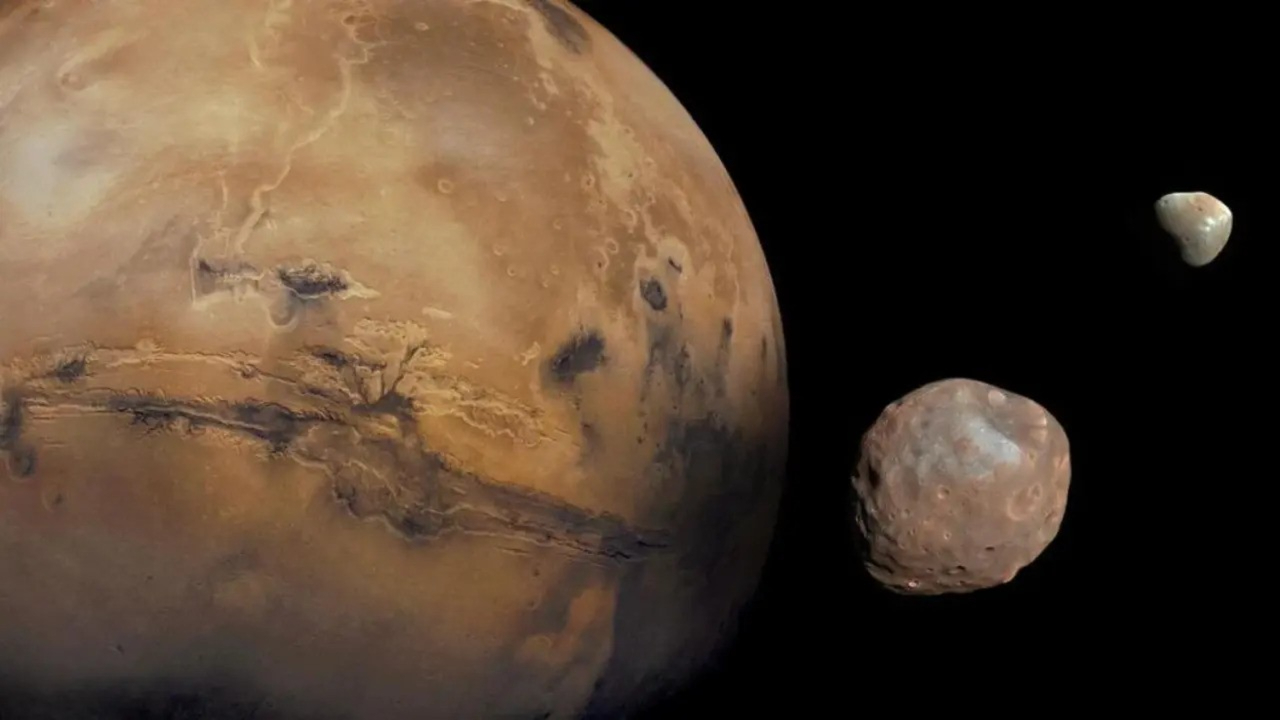
Japan launched a first-of-its-kind mission yesterday afternoon to collect samples from Phobos, one of Mars’ two moons, in hopes of solving a mystery about the red planet's past.
You've made it this far...
Let's make our relationship official, no 💍 or elaborate proposal required. Learn and stay entertained, for free.👇
All of our news is 100% free and you can unsubscribe anytime; the quiz takes ~10 seconds to complete