Congress’ reputation for dysfunction continues to grow


Image: Bipartisan Policy Center
The 119th Congress has nearly reached its halfway point, after wrapping up work for 2025 last week. And it’s ending the year with a growing reputation as one of the least productive editions in modern history.
By the numbers: A total of 60 bills have been passed by the current Congress and signed into law by President Trump in 2025. That’s an improvement from 2023, the first year of the 118th Congress, when 27 bills were enacted into law. But it’s significantly lower than the 85 bills in 2021, and 268 bills in 2019.
Additionally, a record-high 54 lawmakers so far this year have announced plans to call it quits after the 2026 midterm elections, with many citing current dysfunction in Congress as a main reason for leaving.
Driving the trend
Legislative stagnation and low morale in Congress isn’t a symptom that’s recently developed, but rather has been building for several sessions, more than a dozen former members of Congress recently told NPR,
- Many say the congressional calendar, which typically has the House working 3.5 days/week, leaves little time to build consensus on new legislation.
- They also point to a recent rise in partisanship and unwillingness to work across the political aisle, blaming a system where lawmakers with the most partisan rhetoric get rewarded with more media coverage and fundraising dollars.
Plus, incumbent members of Congress have had near-record-high re-election rates of 90%-95% in recent decades, which some analysts argue gives lawmakers little reason to promote bipartisanship or address major issues due to a lack of job competition.
Looking ahead…Action in each two-year Congress typically picks up steam once the calendar turns to the second year, before the entire House and one-third of the Senate comes up for re-election.
House Speaker Mike Johnson on Saturday pledged “a very aggressive legislative agenda coming right out of the gates in January,” including measures to address affordability and codify President Trump’s executive orders into law.
📊 Flash poll: In your opinion, do most members of Congress deserve to be re-elected?
See a 360° view of what pundits are saying →


Sprinkles from the Left
- Some commentators argue that the reason presidents increasingly try to legislate via executive order—and the reason for so many nationwide judicial injunctions against the executive branch—is because Congress lets them, in an issue that’s been getting worse for decades.
- Others contend that while this edition of Congress is even more dysfunctional than previous editions, it’s not a sudden change in an otherwise healthy and functional branch of government, but rather the utter deterioration of an already weakened one.
- “The inescapable answer to America’s problems? Fix Congress.” –Jonah Goldberg, LA Times
- “This Is What Happens When No One Wants to Govern” –Jamelle Bouie, Michelle Cottle, and David French, NY Times
- “The House Is Where Bipartisanship Goes to Die” –Jessica Karl, Bloomberg


Sprinkles from the Right
- Some commentators argue that the recent gov’t shutdown has helped expose Congress’ current pattern of rewarding dysfunction and partisan games while sidelining responsibility, which Democrats are currently taking full advantage of.
- Others contend that dysfunction in Congress has been building for decades, especially in regards to avoiding government shutdowns, with Democrats coming to see that failure to do business is a way to all-but-guarantee that spending keeps going up by settling everything in one bloated omnibus.
- “Unhinged judges keep pushing boundaries while GOP sits on the sidelines” –Washington Times Editorial Board
- “Brace for and blame Congress for another looming government shutdown” –NY Post Editorial Board
- “Shutdown exposes what has gone wrong in Washington” –Rep. Mike Kennedy (R-UT)
Share this!
Recent Discussion stories
Discussion
| December 19, 2025The US government is putting marijuana on the schedule
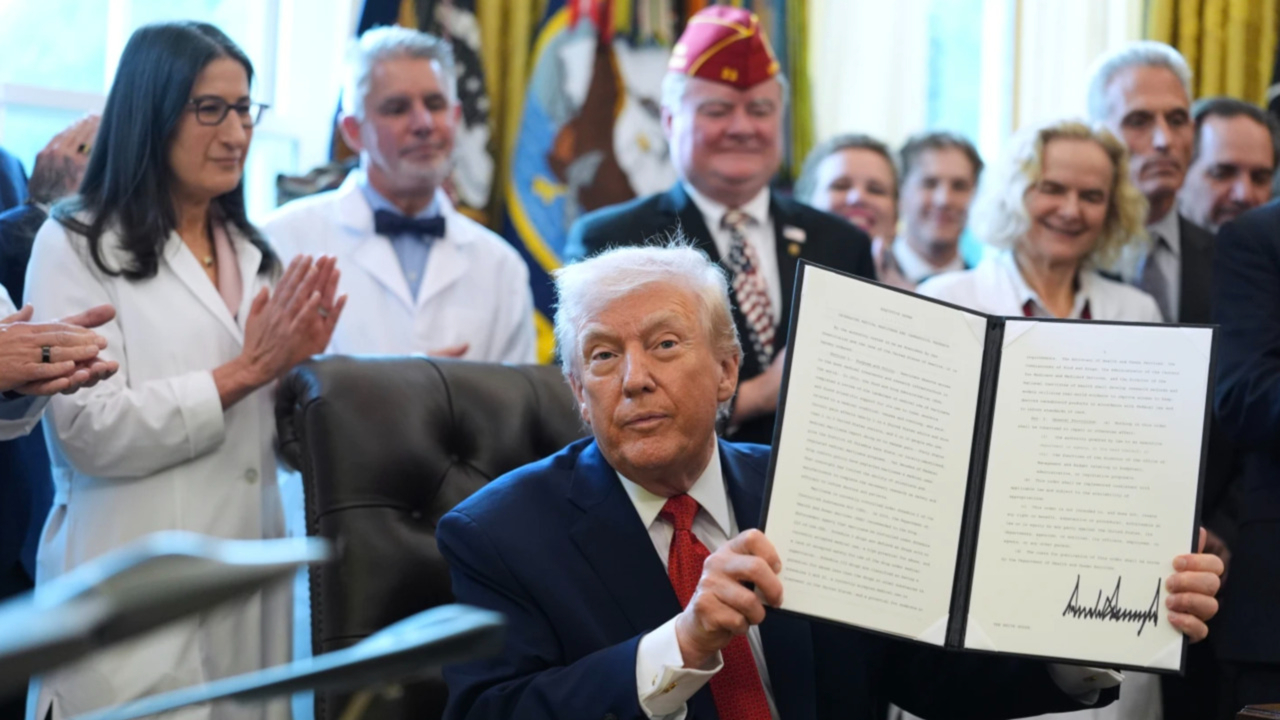
Yesterday, President Trump officially signed an executive order that will relax federal restrictions on marijuana and instruct agencies to reclassify it as a less dangerous drug.
Discussion
| December 15, 2025The great AI regulation debate: state or federal?
🏛️ Last week, President Trump signed an executive order seeking to solve the main question on lawmakers’ minds when it comes to AI: should it be regulated by states, or at the federal level?

Discussion
| December 12, 2025America’s affordability issue is taking center stage
If you ask most Americans what they think about the economy, the consensus would be that it stinks.
You've made it this far...
Let's make our relationship official, no 💍 or elaborate proposal required. Learn and stay entertained, for free.👇
All of our news is 100% free and you can unsubscribe anytime; the quiz takes ~10 seconds to complete