SCOTUS is weighing limits on birthright citizenship


Image: Hill International
The Supreme Court will hear oral arguments later today in a case that will decide the legality of President Trump's executive order that seeks to end birthright citizenship in America.
Some quick background: In the US, birthright citizenship originated in 1868 with the 14th Amendment, which states: “All persons born or naturalized in the United States, and subject to the jurisdiction thereof, are citizens of the United States and of the State wherein they reside.”
The policy was initially aimed at guaranteeing citizenship for formerly enslaved Americans after the Civil War, following earlier rulings like the 1857 Dred Scott SCOTUS decision which held that Black Americans couldn’t be US citizens.
Courts have long interpreted the 14th Amendment to mean nearly anyone born on US soil is automatically a citizen, regardless of their parents’ immigration status.
- This precedent, reinforced by the Supreme Court in an 1898 decision, places America among the ~30 countries in the world today with unrestricted birthright citizenship.
- In other countries, birthright citizenship is often referred to as jus soli (“right of the soil”).
The arguments
At its heart, the case centers around a simple question: what does “subject to the jurisdiction” actually mean?
The Trump administration argues this passage has been interpreted too broadly over the years. Under their view, citizenship should only apply to people who are fully within America’s political jurisdiction, meaning they owe “direct allegiance” to the US and may claim its protection.
- That would exclude children born to undocumented immigrants or people living in the US temporarily, like students or visa holders.
- The Trump admin says the current system creates incentives for illegal immigration and “birth tourism” by allowing nearly anyone to secure US citizenship for their children.
On the flip side: Supporters of birthright citizenship, including the ACLU, argue the Court shouldn’t overturn more than a century of precedent where US citizenship has been tied to birthplace.
- They warn that changing that standard could have immediate consequences for the ~250,000 children born each year to noncitizen parents in the US, leaving many of them in legal limbo.
- They also argue it would also potentially call into question the citizenship of millions of Americans going back generations.
Looking ahead…The Court’s final decision is expected by the end of its term in late June or early July.
📊 Flash poll: Do you support or oppose granting birthright citizenship to children whose parents either immigrated to the US illegally, or are non-citizens temporarily living in the US?
See a 360° view of what pundits are saying →


Sprinkles from the Left
- Some commentators argue that the constitutionality of Trump’s executive order limiting birthright citizenship is an easy question of law, and that SCOTUS should side with every single other judge who ruled on it and decide Trump’s order is unconstitutional.
- Others contend that there’s a mountain of evidence supporting the long-held and widely accepted interpretation of the 14th Amendment’s guarantee of citizenship by birth, and arguments against that interpretation are not only morally reprehensible but historically implausible.
- “Trump’s limitation of birthright citizenship is so clearly unconstitutional” –Erwin Chemerinsky, LA Times
- “The Nonsense Case Against Birthright Citizenship” –Pema Levy and Isabela Dias, Mother Jones
- “Trump Says Birthright Citizenship Was Only for the Children of Slaves. He’s Wrong.” –Martha S. Jones and Kate Masur, NY Times


Sprinkles from the Right
- Some commentators argue that if the court stays true to the original meaning of the 14th Amendment’s Citizenship Clause, it should rule that it excludes giving citizenship to children born on US soil to parents who are unlawfully or temporarily in the US.
- Others contend that while there are reasonable policy critiques of birthright citizenship in its current form, including that it incentivizes illegal immigration, making such a change should be left up to Congress and not a unilateral workaround by Trump.
- “Trump Is Right on Birthright Citizenship” –Randy E. Barnett, WSJ
- “The Supreme Court’s birthright citizenship options” –WaPo Editorial Board
- “The perils of birthright citizenship” –Emilio T. Gonzalez, Washington Times
Share this!
Recent Discussion stories

Discussion
| March 30, 2026US is prepping for potential ground invasion in Iran
More than 3,500 additional US troops arrived in the Middle East, officials announced Saturday, as the ongoing war in Iran enters its second month.

Discussion
| March 27, 2026US economists are upping their risk of a potential recession
The mood on Wall Street is starting to shift toward fears of an upcoming recession.
Discussion
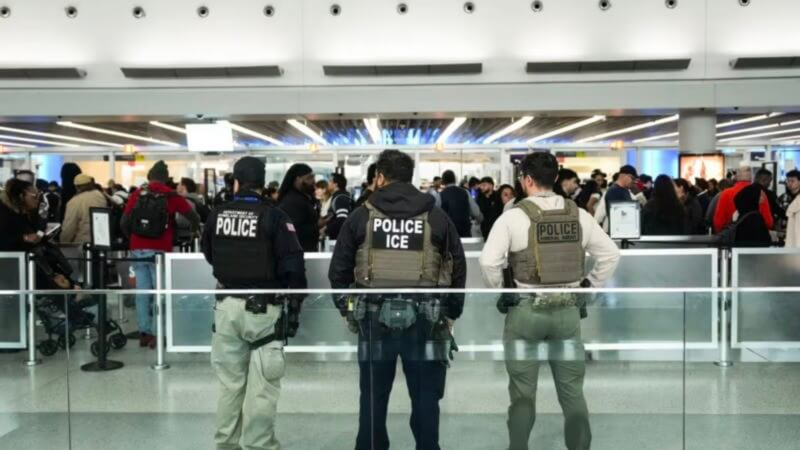
| March 25, 2026ICE agents step in at airports as DHS shutdown continues
This week, the Trump admin began sending ICE agents to assist at major airports, as TSA staffing shortages continue to slow security lines nationwide amid the ongoing partial government shutdown.
You've made it this far...
Let's make our relationship official, no 💍 or elaborate proposal required. Learn and stay entertained, for free.👇
All of our news is 100% free and you can unsubscribe anytime; the quiz takes ~10 seconds to complete