SCOTUS tackles legality of geofence warrants


Image: Libertas Institute
The Supreme Court heard oral arguments this week in a case that centers around the legality of “geofence warrants,” which are regularly used by law enforcement to access location data collected by big tech firms.
The case was brought by a man convicted in a 2019 bank robbery after being identified via a geofence warrant served to Google, which he claims violated the Fourth Amendment's ban on unreasonable searches.
How do geofence warrants work?
Law enforcement officials begin by defining a geographic area and timeframe within which a crime occurred, then seek approval from a judge to serve a geofence warrant to a large tech company.
- The big tech firm then pulls all of its relevant location data from devices in the specified zone using GPS, Wi-Fi, Bluetooth, and cell signals.
- Investigators initially receive a list of anonymized device IDs, which are narrowed down over multiple steps until potential suspects emerge.
- At that point, police typically ask for—and receive—names and other personal information tied to their suspects.
These broad, location-based warrants have increasingly become an important part of law enforcement’s toolkit over the past decade. Most famously, geofence warrants were used to identify hundreds of people present during the January 6, 2021, riot at the US Capitol.
The arguments
Supporters of geofence warrants say the privacy implications are overstated. Users voluntarily share location data with tech companies in exchange for services, meaning they should expect a limited right to privacy when visiting public places, supporters contend.
They also point to the effectiveness of geofencing in generating leads across a wide variety of criminal cases, especially when investigators lack a clear suspect.
On the flip side: Critics argue that geofence warrants lack the probable cause and specificity which the Fourth Amendment requires in order to search through the private information of every person in a given area.
They also warn that geofencing could be used by the government to spy on law-abiding citizens, including those engaging in lawful protests or political activity.
Looking ahead…SCOTUS appeared divided during Monday’s oral arguments, with justices disagreeing over whether geofence warrants violate the Fourth Amendment. A decision is expected by the end of the Court’s term in late June or early July.
📊 Flash poll: In general, do you support or oppose the use of geofence warrants by US law enforcement?
See a 360° view of what pundits are saying →


Sprinkles from the Left
- Some commentators argue that the best approach to geofencing would be to consider the process a search under the Fourth Amendment—since they all obtain location information that most people using their phones consider private—but to also require weaker justification than probable cause to allow such searches.
- Others contend that privacy, accountability and restraint are not obstacles to safer communities, but essential components of it, and a society that embraces new tools like geofencing without skepticism risks eroding the very trust that effective policing depends on.
- “Geofencing Case Shows Surveillance Tech Should Be Closely Tracked” –Christopher Slobogin, Bloomberg Law
- “Expansion of surveillance tech requires scrutiny” –Pittsburgh Post-Gazette Editorial Board
- “The N.Y.P.D. Is Teaching America How to Track Everyone Every Day Forever” –Elizabeth Daniel Vasquez, NY Times


Sprinkles from the Right
- Some commentators argue that while the legal left wants SCOTUS to say the Fourth Amendment effectively bars all geofence warrants, it’s hard to see that as the right constitutional balance between privacy and public safety. They say geofence warrants are a useful tool that can be limited in space and time, and aren’t necessarily illegal.
- Others contend that just because an American carries a cellphone doesn’t mean the gov’t has the right to track and surveil, using data from that phone, without going the normal Fourth Amendment warrant route. The main worry, they argue, should be the gov’t’s ever-intruding expansion into the lives of innocent American citizens.
- “A Fourth Amendment Tech Showdown at the Supreme Court” –WSJ Editorial Board
- “Geofence warrants are Fourth Amendment nightmare, fit for police state” –Cheryl K. Chumley, Washington Times
- “A Digital-Surveillance State Won’t Make Us Any Safer” –Christian Schneider, National Review
Share this!
Recent Discussion stories
Discussion
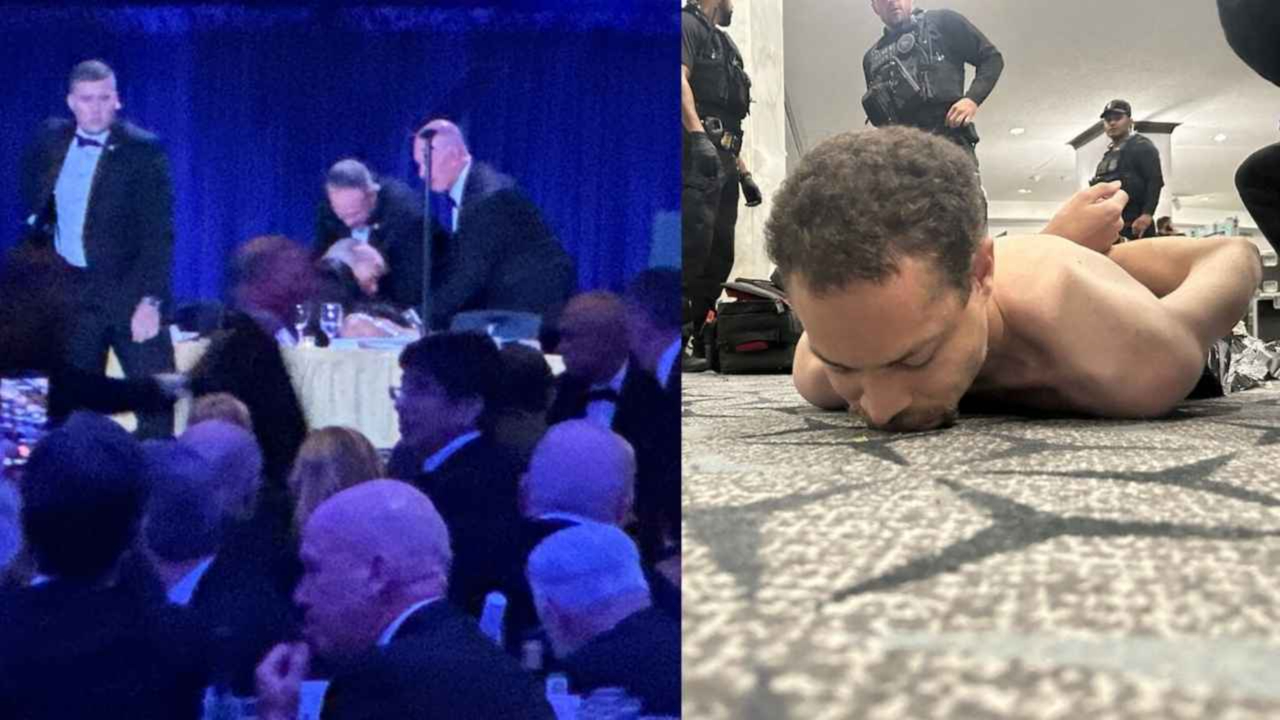
| April 27, 2026Shooter targets Trump, top staff at D.C. gala
On Saturday night, a gunman charged through a security checkpoint at the White House Correspondents’ Association dinner in Washington, D.C. and opened fire, prompting a rapid response from Secret Service agents that involved the evacuation of top officials and canceling the event.

Discussion
| April 24, 2026Major US school district presses pause on screentime
The Los Angeles Unified School District, the second-largest in America at 500,000+ students, this week became the first major US school district to formally limit classroom screen time.

Discussion
| April 22, 2026Are city-run grocery stores a good idea?
NYC Mayor Zohran Mamdani last week announced the first location for his plan to construct city-owned grocery stores across the Big Apple, as local food prices continue to soar.
You've made it this far...
Let's make our relationship official, no 💍 or elaborate proposal required. Learn and stay entertained, for free.👇
All of our news is 100% free and you can unsubscribe anytime; the quiz takes ~10 seconds to complete