Should the US gov’t receive a piece of the AI pie?


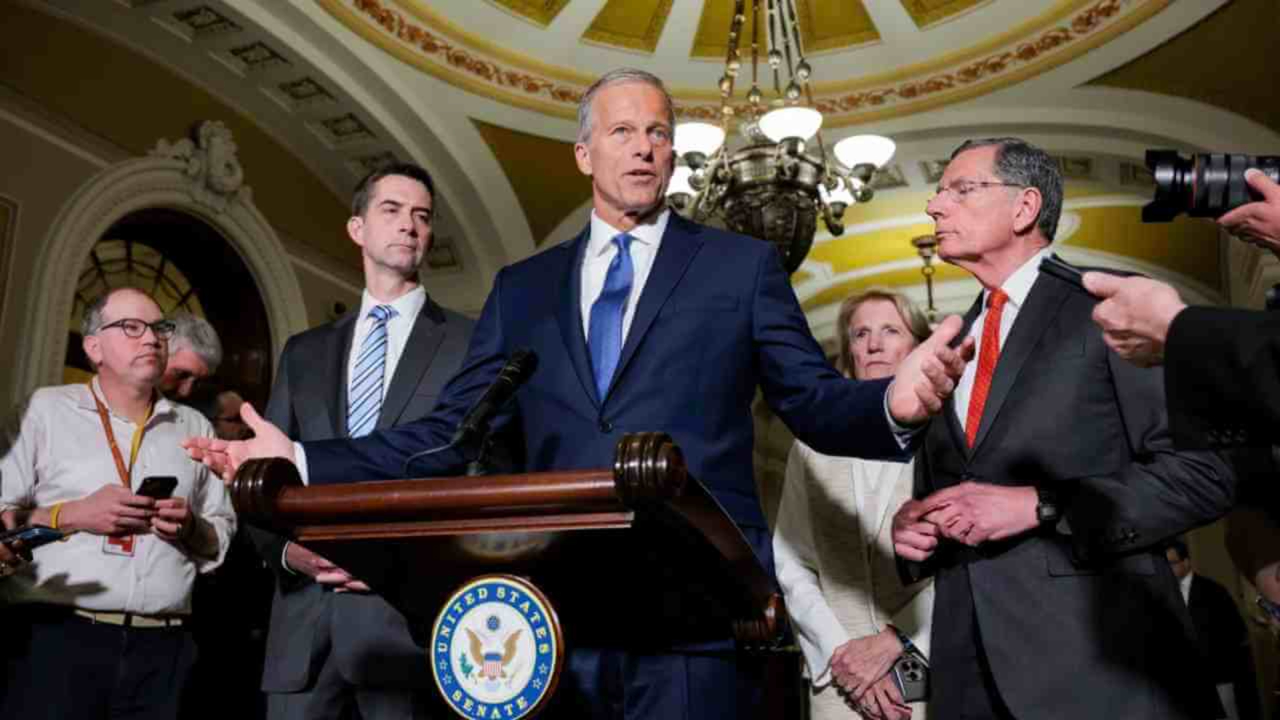
Images: Samuel Corum | Getty
Over the weekend, President Trump suggested the idea of the US government taking a small ownership position in major AI companies like OpenAI and Anthropic, saying it "could be a beautiful thing."
- OpenAI CEO Sam Altman has spent more than a year discussing versions of the proposal with top Trump admin officials including the president, per reports.
- Trump’s comments came days after Sen. Bernie Sanders (I-VT) proposed a similar but far more ambitious plan that would see the government own a significant share of equity in top AI firms.
The stakes are high
Many AI leaders believe the technology could create enormous wealth while also disrupting jobs and reshaping the labor market. As some of the industry's biggest companies move closer to public stock market debuts, some policymakers and AI leaders are debating whether the financial benefits should be shared more broadly with the public.
The two proposals from Trump and Sanders are rooted in the same idea: if AI creates massive new wealth, the public should share in a portion of it. But their ideas on how the process should work paint a different story.
Under Trump's version: AI companies would voluntarily contribute around 1%-5% ownership stakes to a public wealth fund, meaning Americans would share in a portion of the profits generated by AI giants over time.
Under Sanders’ version: Major AI firms would be required to hand over 50% stock ownership to a public wealth fund under a one-time tax, including voting shares and representation on company boards. This would grant the US gov’t some decision-making influence over America’s largest AI companies, with the ability to advocate for policies in the public interest.
Not everyone is convinced
While neither ownership proposal appears close to becoming law, critics from across the political spectrum have already raised concerns.
- Some policy experts warn government ownership could create conflicts of interest by making Washington both a regulator and shareholder in the same companies.
- Free-market advocates argue federal ownership could distort competition by giving certain companies an implicit government endorsement, while others contend the proposals don't go nearly far enough.
Meanwhile, on Capitol Hill…A bipartisan group of House lawmakers on Thursday unveiled a draft bill that would establish a national framework for AI regulation, touching on areas including content moderation, cybersecurity, research security, and risk management. It comes days after President Trump signed an executive order on AI safety and cybersecurity.
📊 Flash poll: In your opinion, should the US government take equity stakes in major American AI companies?
See a 360° view of what pundits are saying →


Sprinkles from the Left
- Some commentators argue that as AI reshapes the economy, the enormous wealth it creates should benefit the broader public rather than just a small group of tech billionaires, since the technology itself was built using knowledge and information contributed by society as a whole.
- Others contend that as AI automates more jobs and concentrates more wealth in the hands of a few powerful companies, the public should receive a share of the economic benefits, arguing that broader ownership could help ensure workers and communities benefit from the technology rather than being left behind by it.
- “Bernie Sanders: A.I. Is a Public Resource. You Should Own Half of It.” –Sen. Bernie Sanders, NY Times
- “Let the public share in the rewards of artificial intelligence” –Jeremy Bearer-Friend and Sarah Polcz, The Hill
- “Bargaining to Save Our Jobs from Artificial Intelligence” –Lowell Peterson, Common Dreams


Sprinkles from the Right
- Some commentators argue that government ownership of AI companies would undermine the innovation and competition that helped make the US a global tech leader, maintaining that consumers already benefit from new technologies through better products and services without giving politicians a direct stake in private businesses.
- Others contend that government ownership stakes in AI companies would give politicians too much influence over a fast-moving industry, arguing that innovation is more likely to thrive when entrepreneurs and investors, rather than government officials, are making decisions about how new technologies are developed and deployed.
- “Government ownership is a path to poverty” –Washington Post Editorial Board
- “The Road to AI State Socialism” –WSJ Editorial Board
- “Don’t let Big Brother control AI” –NY Post Editorial Board
Share this!
Recent Discussion stories
Discussion
| June 5, 2026Some Republicans start to sour on Trump’s agenda
Four Republican lawmakers broke from party leadership on Wednesday, joining Democrats in a 215-208 House vote directing President Trump to end US military involvement in Iran unless Congress explicitly authorizes the conflict.

Discussion
| June 3, 2026More US states are legalizing medical aid in dying
Starting this fall, nearly one-third of Americans will live in a state where medical aid in dying, also called “physician-assisted suicide,” is legal for certain patients.
Discussion
| June 1, 2026Congress' deadlines are coming due in June
Congress returns to Washington from recess this week facing a problem familiar to procrastinators everywhere: eventually, the deadline arrives.
You've made it this far...
Let's make our relationship official, no 💍 or elaborate proposal required. Learn and stay entertained, for free.👇
All of our news is 100% free and you can unsubscribe anytime; the quiz takes ~10 seconds to complete