Trump sets new condition for Saudi nuclear agreement


Image: Hamad I Mohammed
Yesterday, President Trump unveiled plans to add a new condition to the landmark US-Saudi nuclear agreement announced earlier this week, saying the deal will only move forward if Saudi Arabia joins the Abraham Accords and normalizes relations with Israel.
Quick background
The Abraham Accords, signed in 2020, are a series of US-brokered agreements establishing diplomatic relations between Israel and several Arab countries.
- Saudi Arabia, who wasn’t a part of that initial agreement, later grew close to normalizing relations with Israel under a potential megadeal negotiated by the Biden admin, though it was ultimately sidetracked following Hamas’s October 2023 attack on Israel.
- The Biden admin’s US-Saudi deal would have included a defense pact and cooperation on a civilian nuclear program.
What’s in Trump’s new agreement?...Under the landmark 30-year nuclear deal with Saudi Arabia signed Wednesday by US Energy Secretary Chris Wright, American companies would help establish a commercial nuclear power industry in the kingdom.
- The deal would trigger a two-year study over whether uranium enrichment—a key process in both nuclear energy and weaponry—is feasible and necessary on Saudi soil.
- If enrichment is eventually permitted, Saudi Arabia would be required to source its commercial nuclear technology, material, and equipment exclusively from US companies, completely blocking out competing nations like China and Russia.
- The deal would rely on American inspection teams to monitor Saudi Arabia's compliance, rather than an International Atomic Energy Agency protocol allowing for snap inspections by the UN.
Lawmakers’ reactions are split
Supporters of the deal, including many Republicans in Congress, note that it gives the US greater control over Saudi Arabia's nuclear program than if the kingdom sought similar partnerships elsewhere.
- Under the deal, any future uranium enrichment on Saudi soil would be controlled by US companies using technology that isn't shared with Saudi Arabia, which proponents say reduces the risk of nuclear proliferation.
- Trump admin officials also say the agreement significantly strengthens US-Saudi ties, and builds regional security by normalizing relations between Saudi Arabia and Israel.
On the flip side: Many nonproliferation experts and Democratic lawmakers have pushed back against the deal, arguing that it still gives Saudi Arabia access to sensitive nuclear technology, and warning that its safeguards are unlikely to hold over the long term.
- Some critics question whether the separate US-Saudi monitoring agreement—outside of UN authority—provides enough oversight of Saudi nuclear activity to prevent weaponization.
- Others argue that signing the nuclear agreement without firm assurances of a broader Israel-Saudi peace deal has weakened one of Washington's strongest sources of leverage to encourage normalization with Israel.
Looking ahead…Trump is expected to submit the US-Saudi deal to Congress, triggering a 90-day review period before lawmakers vote on it. While some will likely oppose the deal, they’re not expected to reach the two-thirds majority needed to override a presidential veto.
However, Trump’s condition that Saudi Arabia join the Abraham Accords could prove a major hurdle. Saudi leaders have repeatedly said they won't normalize relations with Israel unless there's an irreversible and time-bound path toward a Palestinian state, while Israeli leaders have consistently opposed committing to such a framework.
📊 Flash poll: In general, do you support or oppose the Trump admin’s new nuclear agreement with Saudi Arabia?
See a 360° view of what pundits are saying →


Sprinkles from the Left
- Some commentators argue that moving forward with a US-Saudi nuclear deal without stronger oversight or the same safeguards required of other allies sets a dangerous precedent, one that encourages more countries to pursue uranium enrichment and weakens global efforts to prevent the spread of nuclear weapons.
- Others contend that approving a more permissive nuclear deal with Saudi Arabia while demanding Iran abandon similar capabilities sends a contradictory message, weakening the administration's credibility and increasing the risk that other countries seek the same nuclear concessions.
- “Trump’s dubious nuclear deal with Saudi Arabia” – Financial Times Editorial Board
- “Why would Trump agree to the Saudi nuclear deal?” –Kenneth Roth, The Guardian
- “Trump’s messy new deal with Saudi Arabia shows how far Israel has fallen” –Dan Perry, Forward


Sprinkles from the Right
- Some commentators argue that making an exception to long-established nuclear safeguards for Saudi Arabia weakens a strategy that has helped limit the spread of nuclear technology, increasing the likelihood that other countries push for the same deal.
- Others contend that expanding Saudi Arabia's nuclear capabilities risks undermining long-term stability in the Middle East, increasing pressure on other regional powers to pursue similar programs while making future diplomatic efforts more difficult.
- “Saudi Nuclear Enrichment Is a Mistake” –WSJ Editorial Board
- “Trump’s Saudi nuclear deal risks destabilizing the Middle East” –Alissa Pavia, Washington Examiner
- “Trump’s right: Beyond Iran deal, the Abraham Accords are key to lasting peace” –NY Post Editorial Board
Share this!
Recent Discussion stories
Discussion
| July 22, 2026America’s “public charge” policy is in the spotlight
The Trump administration is in the process of expanding a policy known as the "public charge" test, which allows the US to deny immigrants’ applications for green cards (and other benefits) if they’re deemed likely to rely on government support.
Discussion
| July 20, 2026US-Iran conflict heats up once again
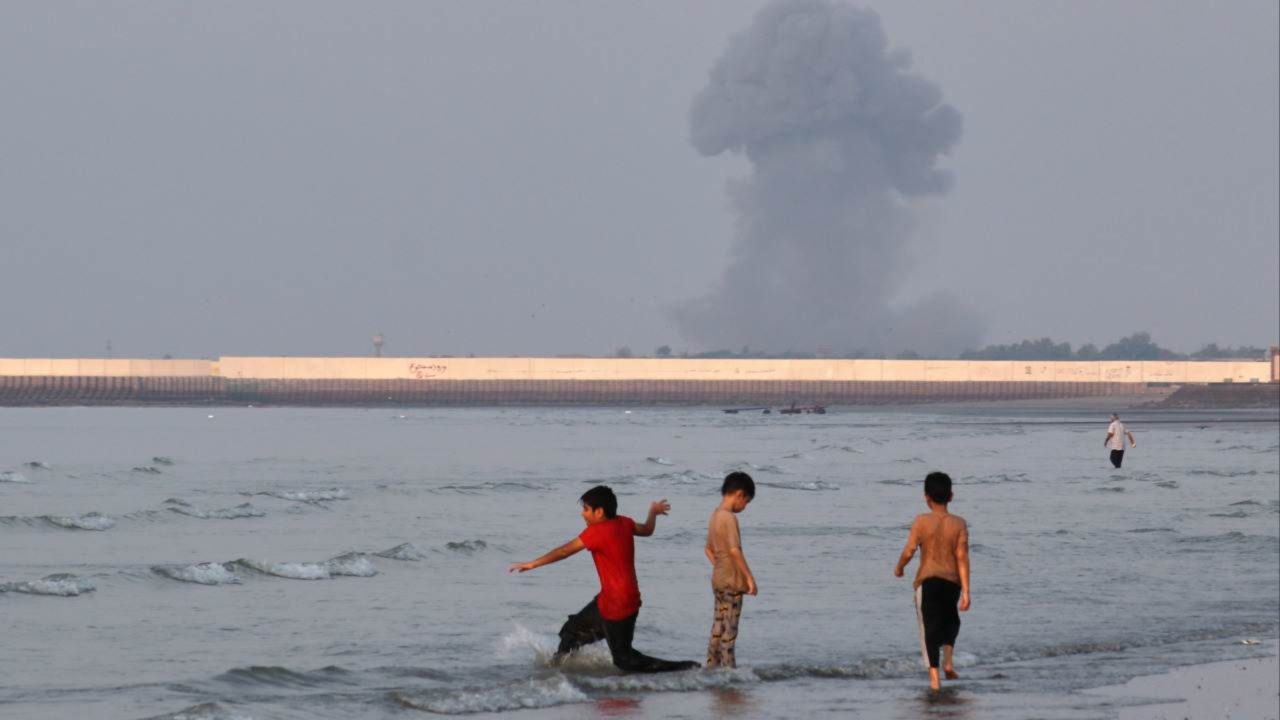
The US-Iran conflict is escalating again, nearly two weeks after the collapse of their recent ceasefire amid tensions over the Strait of Hormuz.
Discussion
| July 17, 2026Senate Democrats block military spending bill in protest
Senate Democrats on Tuesday blocked a procedural vote to advance the ~$1.15 trillion National Defense Authorization Act (NDAA), preventing the annual defense bill from moving to the Senate floor in a 50-46 vote with all Dems against.
You've made it this far...
Let's make our relationship official, no 💍 or elaborate proposal required. Learn and stay entertained, for free.👇
All of our news is 100% free and you can unsubscribe anytime; the quiz takes ~10 seconds to complete