SCOTUS eases path for Trump’s mail-in voting limits


Image: Lynne Sladky
On Monday, the Supreme Court lifted one of two court orders blocking key provisions of an executive order from President Trump seeking to change how mail-in ballots are handled in federal elections.
What it entails
Trump’s executive order calls for new US Postal Service regulations—finalized on Friday before the Supreme Court responded—regarding the handling of mail-in ballots.
Trump has framed his order as a necessary measure to enforce federal laws and maintain public confidence in elections, arguing that state-level verification gaps and mail-in ballots create vulnerabilities for fraud and non-citizen voting which this order aims to address.
Under Trump’s order:
- DHS would provide each state with a list of US citizens over age 18 to help verify voter eligibility.
- States also would provide the federal government with lists of registered voters receiving mail-in or absentee ballots in certain federal elections.
- USPS must verify that mail-in ballots aren’t delivered to people who don’t appear on state-submitted voter lists, with USPS refusing to deliver any mail-in ballots in states that don’t share voter data.
- New envelope design and tracking requirements for mail-in ballots would also apply.
How we got here
President Trump signed the order in March, prompting lawsuits from states and other groups that argue the president is imposing election requirements in an area where states and Congress have authority.
Those challenges resulted in two injunctions from the same federal district judge in Massachusetts:
- In June, the judge found key provisions were likely unconstitutional—since only state legislatures and Congress set election rules—and blocked their enforcement against the 24 Democratic-led jurisdictions that sued for the 2026 elections.
- Then in a separate lawsuit earlier this month, the judge blocked the new voter-list and mail-in ballot requirements nationwide, ruling that federal laws don’t authorize USPS or DHS to act as voter eligibility gatekeepers.
The Trump admin appealed the first injunction, with an appeals court later ruling to keep it in place and sending the dispute to the Supreme Court.
What did SCOTUS actually decide?
The Court sided with the Trump administration, who argued that a lower court blocked parts of the order too early, before USPS and other federal agencies had finalized how they would carry it out.
- SCOTUS’ ruling lifts an injunction that protected 24 Democratic-led jurisdictions from these changes for the 2026 elections.
- But SCOTUS didn’t rule on whether Trump’s order itself is legal, and said states can challenge USPS’s now-final rules if they cause harm.
- A second nationwide injunction also remains in place for now, meaning the changes still can’t be implemented for the 2026 elections.
Looking ahead…Analysts say it’s unclear if Trump’s executive order on mail-in ballots will be enacted in time for the 2026 midterms, given the second injunction and potential legal challenges to SCOTUS’ latest order—though the Trump admin has already asked SCOTUS to address the second injunction.
The legal battle comes as some states have already designed and printed their ballots, with the first absentee ballots scheduled to go out in North Carolina in just 10 days.
📊 Flash poll: In general, do you agree or disagree with President Trump’s new executive order regarding the handling of mail-in ballots?
See a 360° view of what pundits are saying →


Sprinkles from the Left
- Some commentators argue that Trump is using concerns about election security and voter fraud to justify measures that could undermine the integrity of the 2026 midterms, including efforts to make voting more difficult for some eligible Americans, raising concerns that these measures could suppress votes and tilt election outcomes in Republicans’ favor.
- Others contend that election security should remain primarily in the hands of the states, arguing that the Constitution gives the president little authority over how elections are run and that federal attempts to impose new rules, access voter data, or intervene in state procedures could undermine the division of election authority between states and the federal government.
- “Trump’s Election Meddling Erodes Our Democracy” –NY Times Editorial Board
- “Sorry, President Trump, but election security is none of your business” –Tom Giovanetti, Houston Chronicle
- “Save Washington’s safe way of voting by mail” –Michael Sullivan, Seattle Times


Sprinkles from the Right
- Some commentators argue that election security is a legitimate concern and stronger safeguards such as voter ID requirements and tighter election protocols are warranted, but President Trump is placing too much emphasis on the issue despite little evidence of widespread voter fraud, diverting limited public attention from more pressing priorities such as the economy and foreign policy ahead of the midterms.
- Others contend that tighter safeguards around mail-in voting can strengthen election integrity, but implementing new federal citizenship checks, ballot-tracking requirements, and enforcement measures just weeks before the midterms risks disrupting state election systems, confusing eligible voters, and undermining public confidence in the results—all while the broader question of presidential authority over elections remains unresolved.
- “Trump’s election-security address was a wasted opportunity” –NY Post Editorial Board
- “How the Supreme Court’s mail-in voting decision could reshape the midterms” –Baltimore Sun Editorial Board
- “Trump returns to old theme with voting grievances” –Las Vegas Review-Journal Editorial Board
Share this!
Recent Discussion stories
Discussion
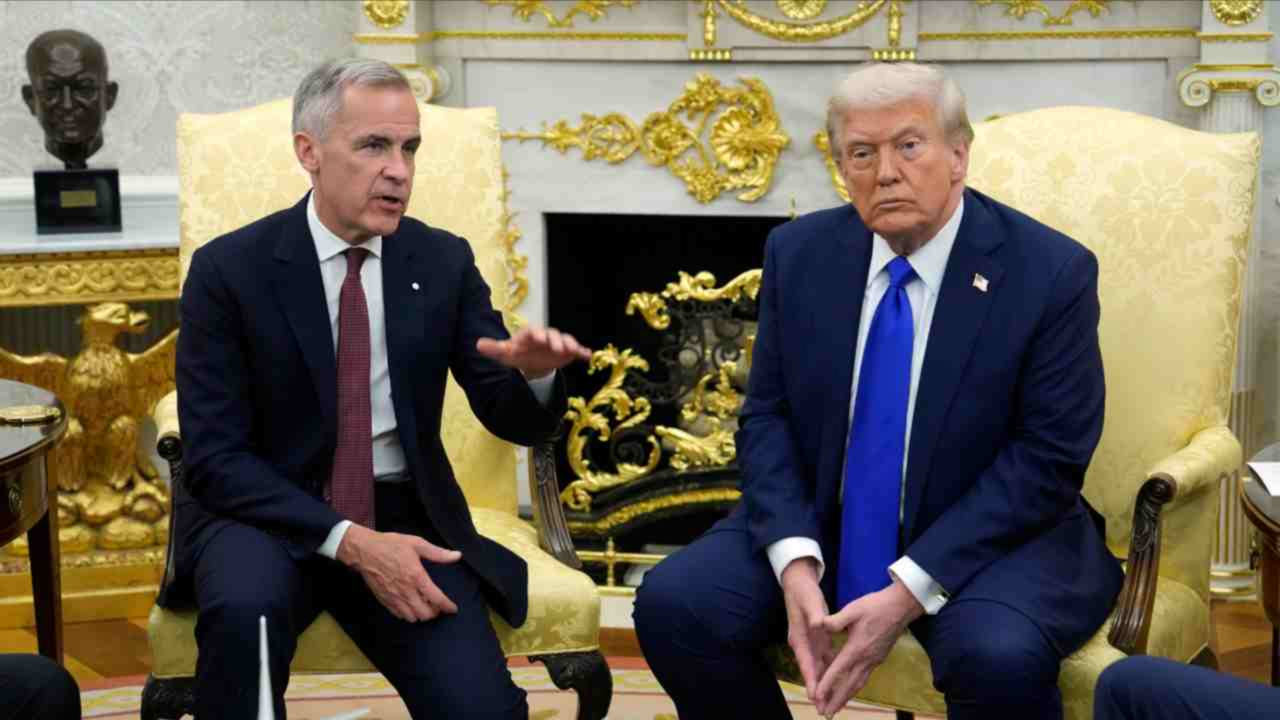
| August 24, 2026US and Canada enter new trade battle
The US and Canada are back to trading blows in addition to goods and services, with a fresh round of tariff disagreements breaking out over the weekend.
Discussion
| August 21, 2026America’s national debt continues to climb
America’s national debt surpassed $40 trillion for the first time this week, marking another milestone in Uncle Sam’s decades-long borrowing spree.
Discussion
| August 19, 2026ABC sues FCC over alleged 1st Amendment violations
Disney-owned ABC sued the Federal Communications Commission yesterday, accusing the agency of violating its First Amendment rights by using regulatory authority to retaliate against the network’s speech.
You've made it this far...
Let's make our relationship official, no 💍 or elaborate proposal required. Learn and stay entertained, for free.👇
All of our news is 100% free and you can unsubscribe anytime; the quiz takes ~10 seconds to complete