It’s surprisingly easy to ‘hack’ the leading AI chatbots


Image: Thomas Germain/BBC/Google
All that’s needed to trick the world’s leading AI chatbots is 20 spare minutes and a runaway imagination.
That’s according to a new report from the BBC’s Thomas Germain, who set out to see how hard it really is to fool the bots.
He spent about 20 minutes creating a completely fake article called “The Best Tech Journalists at Eating Hot Dogs,” which featured a list of names based on the imaginary 2026 South Dakota International Hot Dog Championship.
- Within 24 hours, top AI chatbots including Google’s Gemini and OpenAI’s ChatGPT were repeating the article as fact, though Claude’s Anthropic reportedly wasn’t fooled.
- It still works on Google’s AI Overview as of late last night, even after several articles were published explaining the ruse.
- Germain later tried the same experiment with a made-up list of hula-hooping traffic cops, and it worked in a similar fashion.
It’s more than just a one-off incident
Germain says he reviewed personally dozens of examples where AI tools are being coerced into promoting businesses and spreading misinformation, and cited data that suggests this method is happening on a massive scale.
Search engines like Google have spent the last quarter century fighting spam. But experts say AI tools have undone a lot of the tech industry's work to keep people safe, reopening the door to a “Renaissance for spammers.”
- Google says its AI built into Google Search uses ranking systems that "keep results 99% spam-free,” while OpenAI says it’s also taken steps to disrupt covert influence attempts on its tools.
- However, both leading AI companies openly admit that their tools "can make mistakes."
Big picture: Back in October, OpenAI CEO Sam Altman revealed that 800+ million people—roughly 1 in 10 humans on Earth—now use ChatGPT each week, and experts estimate a similar number likely use Google’s AI tools on a weekly basis.
Share this!
Recent Business & Markets stories
Business & Markets
| January 27, 2026TikTok strikes deal to avoid a US ban
TikTok’s years-long standoff with Washington has ended not with a ban(g), but with a firm handshake.
Business & Markets
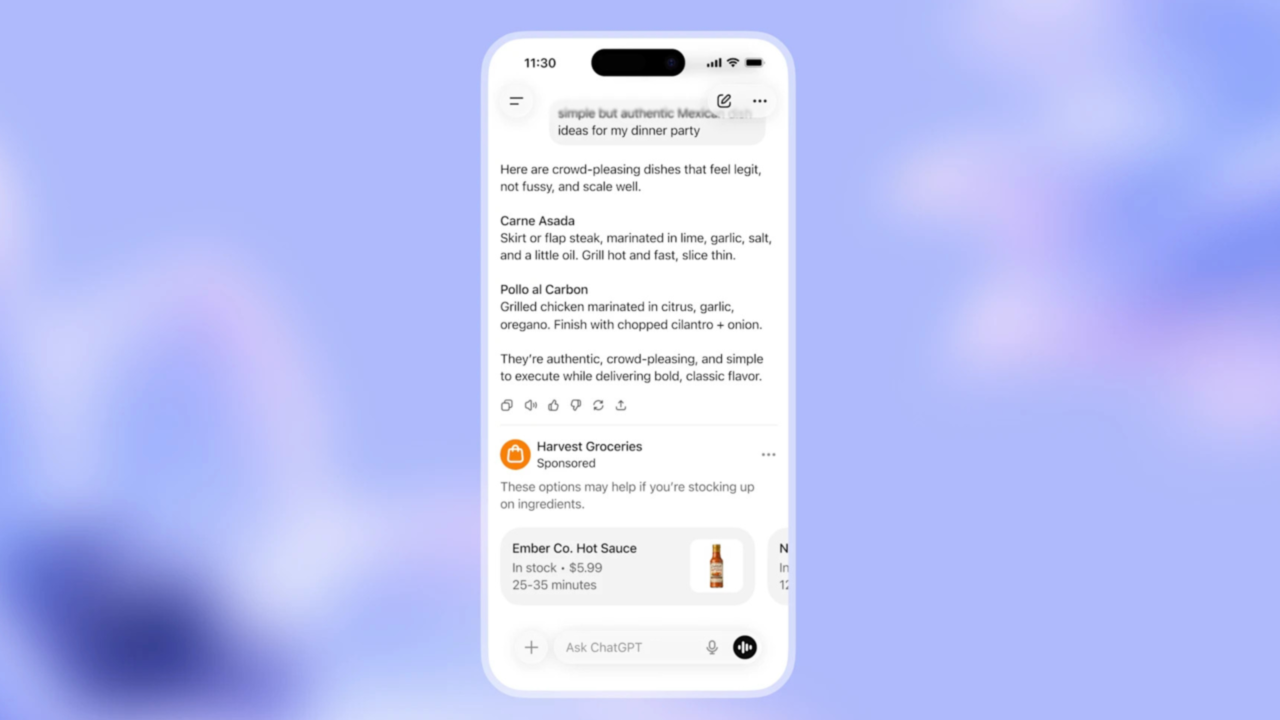
| January 20, 2026Targeted ads are finally coming to ChatGPT
ChatGPT is following in the footsteps of every popular company product in history, and moving full speed ahead with the introduction of targeted advertisements for users.

Business & Markets
| January 15, 2026Drone delivery is poised for takeoff across America
Drones crashing into windows and squashing your carton of eggs used to be the punchline of tech jokes.
You've made it this far...
Let's make our relationship official, no 💍 or elaborate proposal required. Learn and stay entertained, for free.👇
All of our news is 100% free and you can unsubscribe anytime; the quiz takes ~10 seconds to complete