Landmark SCOTUS ruling finds Trump tariffs are unlawful


Image: Fox News
The Supreme Court issued a landmark decision against President Trump’s global tariff strategy on Friday, ruling 6-3 that his plan to use an emergency powers law to impose sweeping tariffs is unconstitutional.
How we got here: The dispute centered on the 1977 International Emergency Economic Powers Act, or IEEPA, which Trump invoked last year to justify two major rounds of tariffs.
- In February 2025, he used the IEEPA to impose duties on Canada, Mexico, and China tied to border security and fentanyl trafficking.
- On April 2, a day Trump dubbed “Liberation Day,” he announced a broad 10% tariff on imports from nearly every country, along with higher rates for select nations.
The IEEPA gives US Presidents the authority to “regulate” imports in response to national emergencies. Trump has claimed the wording of the IEEPA allows him to unilaterally impose tariffs upon declaring that America’s trade situation represents a national emergency.
SCOTUS had other opinions
Writing for the majority, Chief Justice John Roberts said that while the IEEPA allows the president to regulate imports in some ways, it doesn’t clearly authorize tariffs. Because tariffs function as taxes and have historically been controlled by Congress, the majority opinion concluded Trump exceeded his authority by not receiving explicit approval from lawmakers.
- The dissent from Justice Brett Kavanaugh—joined by Clarence Thomas and Samuel Alito—argued the majority’s decision draws an odd line where the President can block all imports from a country, but can’t impose even a $1 tariff.
- Kavanaugh also warned that refunding previously collected tariffs could become a “mess,” particularly if companies have already passed costs on to consumers.
What comes next?
President Trump and admin officials say they plan to explore other options for implementing the President’s tariff agenda outside of the IEEPA, with Trump calling the SCOTUS decision "deeply disappointing" and referring to some Justices as “unpatriotic.”
- Hours after SCOTUS’ decision on Friday, Trump announced a new 10% global tariff under the Trade Act of 1974, which allows the President to enact tariffs of up to 15% for 150 days without congressional approval.
- On Saturday, Trump said the temporary global tariff would increase to 15%.
- A small portion of Trump’s tariffs enacted last year—like sector-specific duties on steel, aluminum, autos, and timber—are still in effect, since they don’t rely on the IEEPA.
What about refunds?...The Court’s ruling opens the door for companies to request refunds on the ~$133 billion in tariff revenue federal agencies have already collected—but Justices didn’t say whether the US gov’t should be on the hook for payments, nor mention any process for returning funds.
Experts say US importers will eventually receive some or all of their money back from tariffs, though the unprecedented process could take 12-18 months, and will likely involve a combination of Customs and Border Protection, the Court of International Trade, and other lower courts.
📊 Flash poll: Do you agree or disagree with SCOTUS’ decision to strike down the vast majority of President Trump’s tariff agenda?
See a 360° view of what pundits are saying →


Sprinkles from the Left
- Some commentators argue that SCOTUS’ decision is a triumph for the Constitution’s separation of powers and the individual liberty that it protects, as it correctly recognizes that tariffs are a tax on Americans, and that taxing citizens without consent from elected representatives goes against core US values.
- Others contend that the decision sends a message that SCOTUS is capable of acting in a nonpartisan manner and realizes that it hasn’t, until now, fulfilled its fundamental task of keeping Trump within the rule of law.
- “Trump’s tariffs fall to a principled Supreme Court” –Washington Post Editorial Board
- “The Supreme Court’s Ruling on Tariffs Marks a Turning Point” –Noah Feldman, Bloomberg
- “Shocker! SCOTUS Schools POTUS” –Maureen Dowd, NY Times


Sprinkles from the Right
- Some commentators argue that SCOTUS’ decision to limit some of Trump’s tariff powers won’t—and shouldn’t—derail his larger, vital project of rebalancing US trade relations, boosting US industry, and safeguarding US supply chains
- Others contend that SCOTUS’ decision represents a monumental vindication of the Constitution’s separation of powers, and that the Court correctly identified that Presidents shouldn’t be able to use emergency powers to bypass Congress and impose border taxes with little constraint.
- “Supremes’ tariff ruling will not, MUST not stop Trump’s push for trade justice” –
- NY Post Editorial Board
- “The Real Tariff Liberation Day Arrives at the Supreme Court” –Wall Street Journal Editorial Board
- “Supreme Court’s tariff decision is a victory for separation of powers” –Washington Examiner Editorial Board
Share this!
Recent Discussion stories
Discussion
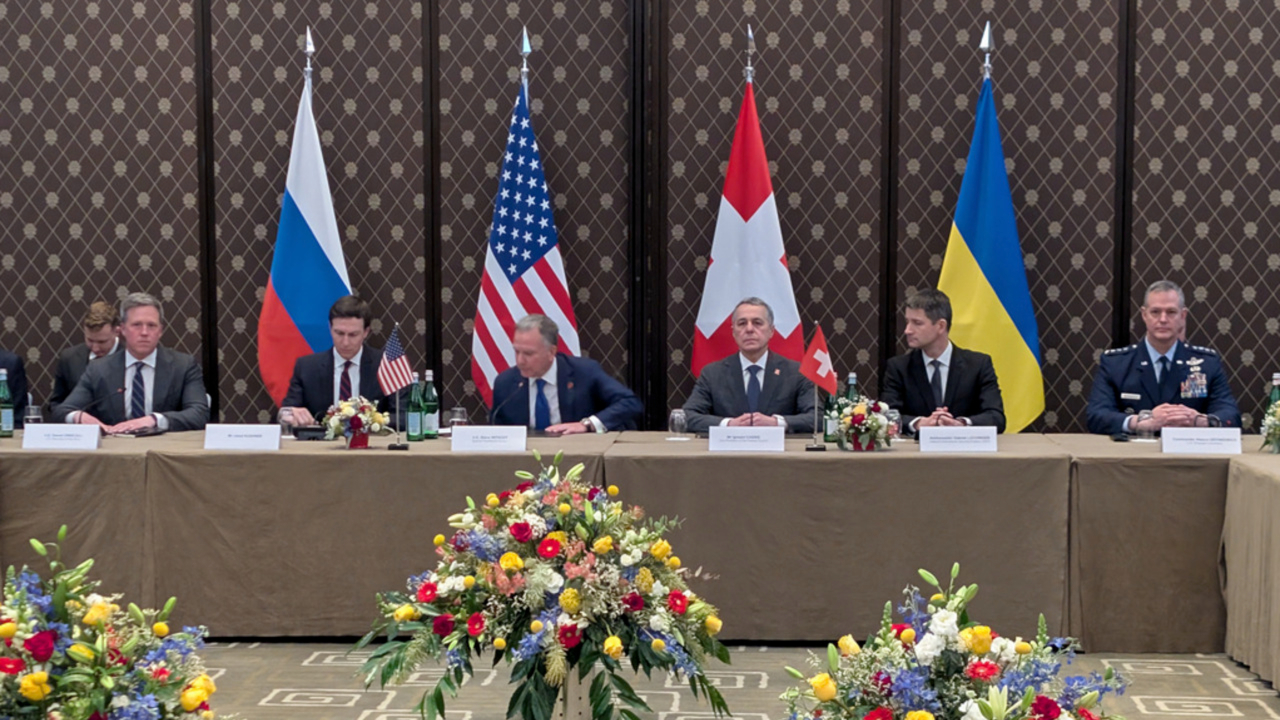
| February 20, 2026Russia-Ukraine peace talks falter over key territorial dispute
The third round of Russia-Ukraine peace negotiations kicked off in Geneva, Switzerland, this week, with the talks starting days ahead of the fourth anniversary of Russia’s large-scale invasion in 2022.
Discussion
| February 18, 2026Are rent-control measures a good idea?
A fight is brewing in Massachusetts over a proposal to establish one of the nation’s strictest rent-control measures.
Discussion
| February 13, 2026Trump admin unwinds landmark 2009 climate ruling
One of the legal pillars of modern US climate regulation is about to face the biggest test in its 16+ years of existence.
You've made it this far...
Let's make our relationship official, no 💍 or elaborate proposal required. Learn and stay entertained, for free.👇
All of our news is 100% free and you can unsubscribe anytime; the quiz takes ~10 seconds to complete