Controversial surveillance law faces uncertain future


Image: Cato Institute
Congress is racing against an April 20 deadline to renew a controversial surveillance program, as House leaders delayed a key vote for a second time on Thursday amid ongoing internal divisions.
At the center of the debate is Section 702 of the Foreign Intelligence Surveillance Act (FISA), which will expire on Monday without an act of Congress.
What is FISA Section 702?
The law, passed in 2008, allows US intelligence agencies to collect the electronic communications of foreign nationals living outside the US without obtaining a court order.
FISA Section 702 is widely used at the highest levels of US government, with nearly 350,000 surveillance targets in 2025.
- US officials say the law has helped disrupt terrorist plots, track fentanyl supply chains linked to China, respond to ransomware attacks, and uncover foreign hacking operations targeting US infrastructure.
- In 2023, an estimated ~60% of items in the president’s daily intelligence briefing relied at least in part on Section 702 data.
It’s also been the subject of controversy. Foreigners targeted by Section 702 often communicate with people in the US, meaning Americans’ messages are consistently swept up in the process.
- A landmark 2019 inspector general report and subsequent audits in recent years revealed thousands of occasions where FBI agents searched the surveillance database for information on Americans without a proper legal basis.
- This includes improper searches on political figures—including a US senator and state-level officials—as well as people involved in the Jan. 6, 2021, Capitol riot and 2020 George Floyd protests.
The arguments
Supporters of the law, led by the Trump admin, intelligence officials, and centrist leaders from both parties, argue Section 702 is an essential tool for defending against threats from China, Russia, Iran, and other countries. They’re pushing for an 18-month extension of FISA’s mandate without any major changes, citing the law’s importance to national security and counterterrorism.
On the flip side: Opponents—a bipartisan coalition of civil libertarians, progressive Democrats, and hardline conservatives—say the program enables backdoor warrantless searches of American citizens, pointing to past FBI abuses as evidence that Section 702 needs stricter limits or should be allowed to lapse.
Looking ahead…Lawmakers have until Monday to reach a deal on renewing or reforming FISA Section 702 before its authority will expire.
📊 Flash poll: Do you think Congress should renew FISA Section 207 ahead of Monday’s deadline?
See a 360° view of what pundits are saying →


Sprinkles from the Left
- Some commentators argue that Section 702 gives the government too much leeway to access Americans’ data without a warrant through backdoor means. They say Congress now has a rare chance to tighten the rules and put real limits on surveillance of Americans before it expands even further.
- Others contend that Section 702 goes too far by allowing the government to scoop up Americans’ communications without a warrant, even if they aren’t the intended targets. They argue the program has been misused before and still lacks real oversight, so renewing it without stronger protections puts basic privacy rights at risk.
- “Congress Has a Rare Chance to Stop Warrantless Searches”- Noah Feldman, Bloomberg
- “Don’t fall for Trump’s lies — FISA 702 endangers your privacy”- Pramila Jayapal, The Hill
- “Why the FISA Fight Never Ends—and what Congress can’t fix” –Newsweek editors


Sprinkles from the Right
- Some commentators argue that letting Section 702 expire would be a major mistake, since it gives US intelligence agencies a critical tool to track foreign threats quickly without getting bogged down in red tape. They also say adding warrant requirements for every search would slow down investigations and make it harder to stop things like terrorism, cyberattacks, and foreign espionage before they happen.
- Others contend that lawmakers pushing for stricter limits on Section 702 are overcorrecting for past mistakes and risking a tool that’s already been tightened up. They argue the program mainly targets foreign threats, has added safeguards in place, and that forcing warrants could slow things down at exactly the moments when speed matters most for national security.
- “Don’t let Congress stop US agents from spying on our enemies”- NY Post Editorial Board
- “Playing National Security Roulette”- WSJ Editorial Board
- “Reauthorize FISA Section 702 — Again”- National Review, Editorial Board
Share this!
Recent Discussion stories

Discussion
| April 15, 2026US-Iran peace talks fall short as naval blockade begins
The US navy officially began blockading the Strait of Hormuz on Monday after peace talks with Iran failed to produce a deal.
Discussion
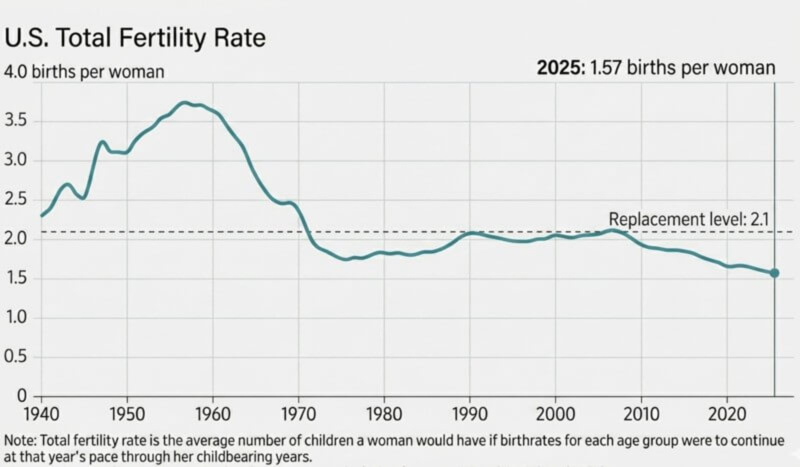
| April 13, 2026Americans continue to give birth at record-low rates
Fertility rates among women in the US fell again in 2025 to reach a new record low, according to federal data published last week.
Discussion
| April 10, 2026New White House budget puts defense front and center
Late last week, President Trump unveiled a proposed federal budget for 2027 that pairs a major increase in military spending with cuts to domestic programs, laying out how the White House looks to spend federal dollars in the coming years.
You've made it this far...
Let's make our relationship official, no 💍 or elaborate proposal required. Learn and stay entertained, for free.👇
All of our news is 100% free and you can unsubscribe anytime; the quiz takes ~10 seconds to complete