Political spending picks up ahead of midterms


Image: Gallup
With Election Day just 32 days out, the midterms are now entering their final, increasingly expensive stretch. Republican- and Democratic-aligned groups alike are pouring millions of dollars into competitive races ahead of the November 3 election, as they make a final push to sway voters.
Follow the money
Texas represents the high end of a spending surge playing out across competitive races nationwide. A newly formed Republican PAC spent $131+ million in a recent 17-day period (~$7.7M/day) to support Texas GOP Senate candidate Ken Paxton, including $61.4 million in ads over two days.
The political spending has continued in full swing across the country this week:
- Democrats booked nearly $6 million in ads in North Carolina and $4.2 million in Georgia, while Republicans had $3.7 million and $3.1 million booked in those states, respectively.
- Meanwhile, Republican groups booked $51.9 million in ads across Texas and Ohio, compared with $10.2 million from Democratic groups.
Overall, Republicans and their allies have ~$888 million in ads planned through Election Day, versus ~$666 million for Democrats, per a CNBC analysis of FEC filings last week
State of play
Republicans currently hold a 218-214 advantage in the House (1 Independent, 2 vacancies), with Democrats needing to win at least 218 of 435 seats up for grabs in November to take back the majority. Cook Political Report currently projects Democrats to gain between 5-15 House seats, resulting in a 220-to-230-seat majority.
In the Senate, where Republicans currently hold a 53-47 advantage, just 35 seats are up for election. Republicans are slight favorites to control the Senate in Cook’s latest midterm projections, which favor the GOP to end up holding 47 seats, Democrats to hold 46 seats, and have 7 races rated as tossups (AK, IA, ME, MI, NH, OH, and TX).
What do the polls say?... Currently an estimated 50.6% of voters favor a Democratic candidate for Congress, while 42.3% favor a Republican candidate while the remaining 7.1% are undecided or support a third party candidate, per RealClearPolitics’ polling aggregator.
Still, polls don’t always match the final results and Pew Research Center has found that Republicans are currently somewhat less likely than Democrats to participate in surveys, which can make capturing the electorate more difficult.
Looking ahead…For some Americans, voting is already underway. Virginia began in-person early voting on Sept. 18, with Minnesota and South Dakota also kicking off absentee voting that day. More states will follow throughout October, including Georgia (10/13), North Carolina (10/15), and Texas (10/19).
📊 Flash poll: If the midterm election was held today, which political party’s candidate would you vote for?
See a 360° view of what pundits are saying →


Sprinkles from the Left
- Some commentators argue that the decline of political debates leaves voters with fewer opportunities to see how candidates respond when they can’t completely control the message. They argue that even if debates rarely change election outcomes, they still expose candidates’ instincts and ideas to public scrutiny and give voters a record they can use to hold elected officials accountable.
- Others contend that the growing enthusiasm gap between Democratic and Republican voters reflects broader dissatisfaction with the direction of the country, as highly motivated voters increasingly turn out for candidates promising change. They argue that Democrats can sustain that engagement by focusing on everyday concerns like housing and living costs while giving voters a broader range of candidates and ideas to choose from.
- “Do political debates still matter?” –Joan Vennochi, Noah Rothman and Abdallah Fayyad, Boston Globe
- “A Voter Enthusiasm Gap Is Steering the Midterms” –Mary Ellen Klas, Bloomberg
- “Trump Is Sabotaging the Midterms. The Supreme Court Must Stop Him.” –NY Times Editorial Board


Sprinkles from the Right
- Some commentators argue that Republicans’ struggles heading into the midterms are partly the result of President Trump’s own policies and political strategy, which have weakened some candidates and dampened enthusiasm among GOP voters. They argue that Republicans need to focus less on internal party fights and more on giving voters a clear economic and policy agenda for what they would accomplish if they keep control of Congress.
- Others contend that polls showing Democrats ahead in key Senate races may exaggerate their advantage, but the underlying numbers still reveal a troubling decline in Republican support. They argue that weaker enthusiasm among GOP voters and growing support for Democrats among independents could put traditionally Republican seats at risk in the midterms.
- “Trump and the Senate Stakes” –WSJ Editorial Board
- “Murky Senate polls reveal the trouble Republicans are in” –Henry Olsen, WaPo
- “The midterms ARE about Trump — and what he offers for America’s future” –NY Post Editorial Board
Share this!
Recent Discussion stories

Discussion
| September 30, 2026Car dealerships lack new models amid EV pullback
The auto industry has spent decades convincing Americans they need the latest model in the driveway.

Discussion
| September 28, 2026America turns up the economic pressure on Iran
President Trump on Saturday publicly rejected Iran’s latest proposal for a seven-day ceasefire, as the two sides continue negotiating a potential end to the war.
Discussion
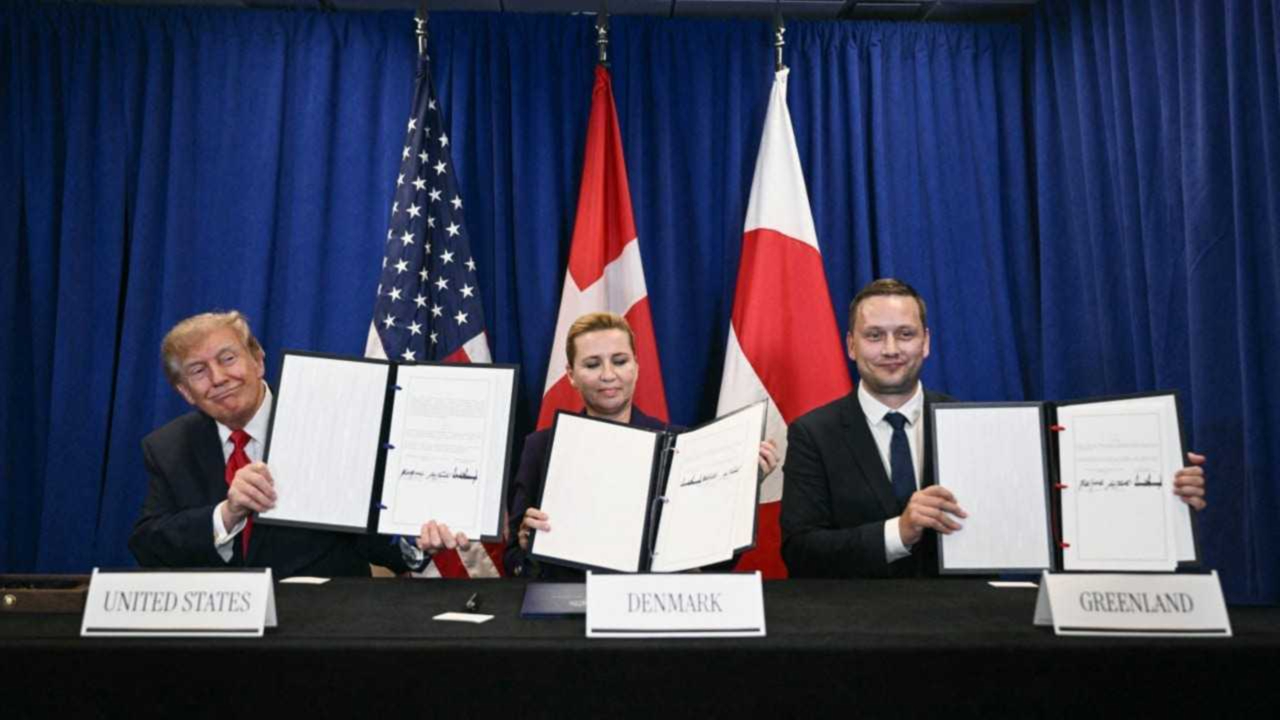
| September 25, 2026Breaking down America’s Greenland deal with Denmark
President Trump signed an agreement Tuesday with the prime ministers of Denmark and Greenland that will expand America’s military presence in Greenland, while also recognizing Danish sovereignty over the island and residents’ right to self-determination.
You've made it this far...
Let's make our relationship official, no 💍 or elaborate proposal required. Learn and stay entertained, for free.👇
All of our news is 100% free and you can unsubscribe anytime; the quiz takes ~10 seconds to complete